
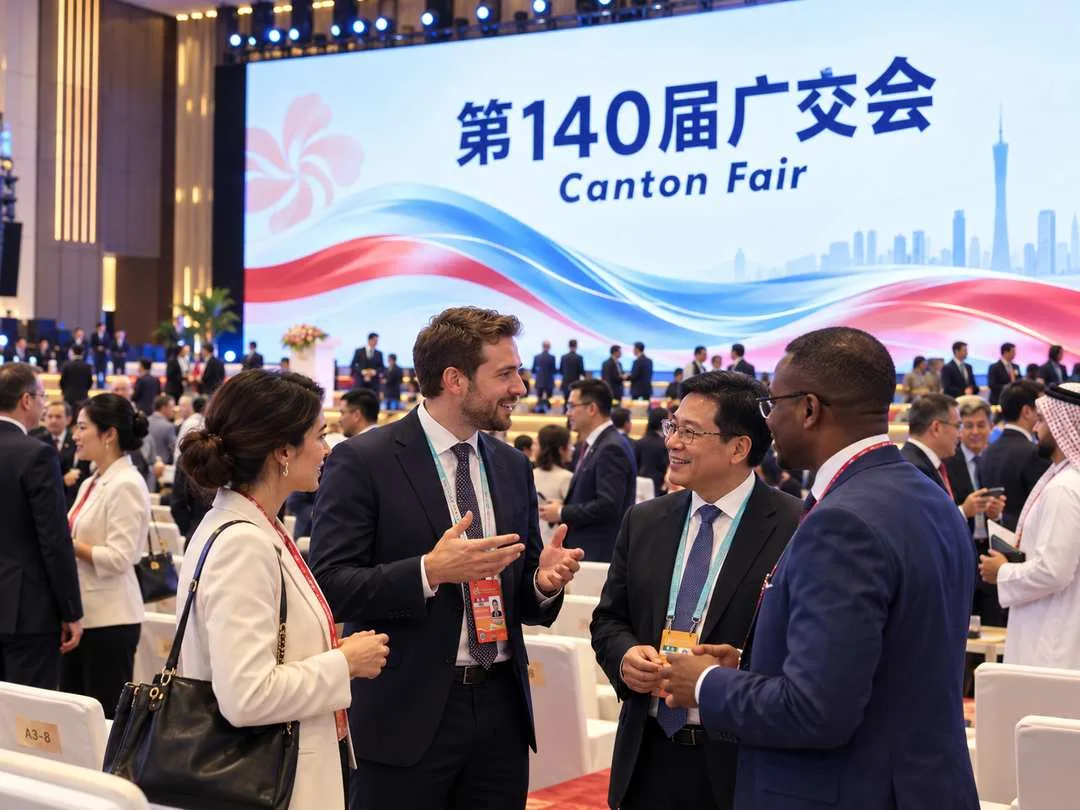
The 140th Canton Fair takes place in Guangzhou across three phases in autumn 2026. For overseas buyers, the useful outcome is not just a collection of catalogues: it is a shortlist of suitable products, written specifications and clear next steps. ROYAL UNION can discuss Guangzhou-side meeting coordination and Yiwu sourcing follow-up, subject to advance arrangements and the scope of your project.
140th Canton Fair dates: choose the right phase
The official schedule lists the following dates. As of this article's publication on October 22, Phase 1 has finished; buyers planning the remaining phases should confirm their product sections and appointments before travelling.
| Phase | Dates | Official theme |
|---|---|---|
| Phase 1 | October 15–19, 2026 | Advanced Manufacturing |
| Phase 2 | October 23–27, 2026 | Quality Home Life |
| Phase 3 | October 31–November 4, 2026 | Better Life |
October 20–22 and October 28–30 are changeover intervals, not regular exhibition days. Confirm the exact category, exhibitor and hall using the official Canton Fair website. The dates and intervals are also published in the Ministry of Commerce introduction to the 140th fair.
For registration and getting around Guangzhou, use our separate Canton Fair route and buyer preparation guide. Apply for your buyer badge through official channels; a meeting with a sourcing company does not provide entry to the fair.
Canton Fair, Yiwu Fair and Yiwu market: three different tools
Combining Guangzhou and Yiwu works best when each stop has a defined job. The Canton Fair is a phased exhibition: the products you want determine which dates and halls are useful. The Yiwu Fair is a separate exhibition in a different city. The Yiwu International Trade Market is a separate purchasing destination again. Booking a trip to Yiwu does not mean that you have registered for the fair, and attending the fair does not replace a category-focused market plan.
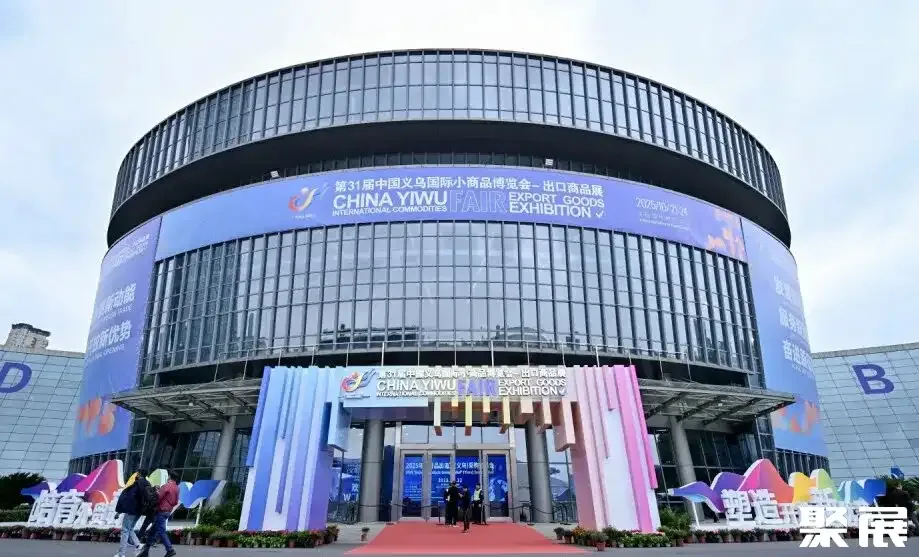
The organizer's official Yiwu Fair introduction identifies the 32nd China Yiwu International Commodities Fair – Export Goods Exhibition at Yiwu International Expo Center on October 21–24, 2026. Its announced sectors include daily consumer goods, hardware, electronic appliances, toys, sports and outdoor goods, stationery and trade services. Use its exhibitor directory to confirm relevant companies rather than assuming every supplier you need will be present.
For your buying plan, assign a different output to each stop. In Guangzhou, the output might be a shortlist of furniture suppliers and sample options. At Yiwu Fair, it might be a comparison of complementary household or hardware products. At the market, it might be a targeted search for items missing from the shortlist. These are examples of how to organize the work, not a claim that one location is always cheaper or better.
Build a two-city itinerary around the overlap
The dates create an important planning constraint. Yiwu Fair overlaps with Canton Fair Phase 2 on October 23 and 24. You cannot spend those full days at both exhibitions. A practical itinerary therefore starts with priority meetings, not a promise to see every hall. Put essential products first, then allocate time for travel, registration, quotation review and follow-up discussions.
Option A: prioritize Guangzhou. If your most important suppliers are available during Phase 2, protect those appointments. You can investigate a Yiwu market follow-up separately, but do not describe a visit after October 24 as attendance at the 2026 Yiwu Fair. Ask which Yiwu suppliers or product categories justify the additional journey and confirm availability before booking.
Option B: prioritize Yiwu Fair. If the confirmed exhibitor shortlist is a strong match for your buying brief, allocate the fair days first. A shorter Guangzhou visit may still be possible within the relevant phase, subject to travel and appointment availability. Decide what you will deliberately leave out; an overfilled itinerary can leave no time to compare the quotations you collect.
Option C: separate discovery from follow-up. A buyer can attend one exhibition and appoint a local team to research agreed gaps or follow up selected suppliers. Define the requested records, sample handling and communication schedule. Remote assistance should produce information you can review, not a vague assurance that someone has visited the market for you.
For any option, check current transport schedules and the exact arrival location before paying for travel. This article does not promise a particular flight, train, transfer time or admission slot. Leave room for delays and avoid arranging a supplier meeting immediately after an uncertain intercity connection. Share your itinerary with the colleague coordinating the meeting so both sides know what has actually been confirmed.
Keep registration and sourcing appointments separate
The organizer also publishes a Canton Fair × Yiwu Fair reward programme. Its current page describes a subsidy for eligible overseas buyers, with document checks, exclusions and a collection window ending October 23, 2026. Verify the current terms directly with the organizer before relying on it when planning your visit. ROYAL UNION does not administer this programme or guarantee eligibility, availability or payment.
A sourcing appointment is not an exhibition entry credential. Review the current Canton Fair overseas buyer badge guide and use the organizer's system for registration. Requirements depend on the applicable badge and identity category, so check your own situation rather than relying on another traveller's experience.
Check Yiwu Fair registration separately through its official visitor services. Save your registration confirmations and appointment details in an accessible place. Do not send passport copies or payment information in a general website sourcing inquiry; the first discussion with ROYAL UNION should focus on your products, company, purchasing needs and proposed dates. Sensitive documents should only be handled through the appropriate verified process when genuinely required.
Before the fair: prepare one brief for every supplier
Start with the range you intend to buy, rather than a long list of unrelated booths. A furniture importer may need a coordinated dining collection; a household-goods retailer may need storage, kitchen and cleaning items with consistent packaging. Separate essential products from optional additions so meetings stay focused.
- Product references: photos, links, drawings or a SKU list, with the intended use.
- Specification: dimensions, materials, finish, colour and any features that cannot change.
- Order structure: expected units by model and colour, including your trial-order plan.
- Destination and sales channel: country of import, retail stores, online sales or project supply.
- Packaging and timing: private-label needs, carton requirements and your target delivery window.
If you do not know a specification yet, mark it as undecided. An explicit open question is more useful than an assumption that later changes the price or product.
At supplier meetings: record what the quotation actually includes
A display sample and an attractive price are starting points, not an order specification. Keep each supplier's legal business name, contact, booth reference and product code alongside your notes. With permission, photograph the sample and label the image with the same code.
Ask whether the minimum quantity applies to each model, colour or packaging design. Confirm which material and construction the price covers, the quotation's delivery basis, sample costs and validity. Record tooling, artwork, domestic transport and other separately charged items where relevant.
For furniture sourcing, ask for assembled dimensions, construction details, packed size, gross weight and assembly instructions. For mixed homeware orders, record quantities and carton information by SKU; do not treat a mixed-order minimum as permission to buy every variant in a very small quantity.
Request documents relevant to the exact product and destination. A generic certificate or a report for another model is not enough to establish suitability. Agree on the sample, checks and any specialist testing needed before committing to production.
After Guangzhou: use Yiwu sourcing to fill specific gaps
A Yiwu follow-up can be useful when your shortlist still needs complementary daily-use products, packaging choices or alternative suppliers. It is not automatically necessary for every buyer. Base the decision on what remains missing from your purchasing brief and the time available for meaningful comparison.
ROYAL UNION is a Yiwu-based sourcing and supply-chain partner under MU Group. Our Yiwu sourcing services can cover product and supplier research, sample coordination, order follow-up, agreed quality-check coordination, warehouse receiving and multi-supplier consolidation preparation. Scope and commercial terms are confirmed for each project.
Share your fair shortlist before arranging further visits. Keep approved samples, revised quotations and packaging instructions linked to the same product records. For a combined shipment, review supplier readiness, carton data and logistics requirements before deciding whether to wait, split an order or change the loading plan.
Plan an assortment, not just individual attractive products
Exhibitions make it easy to discover more products than your opening order can support. Before adding an item, ask what role it plays in your range. Is it a core product, a complementary accessory, a seasonal test or an alternative supplier for an existing line? This simple classification helps prevent a buying trip from becoming an unconnected collection of samples.
Consider a hypothetical home-living retailer building a dining range. The furniture, table accessories and storage products may look coordinated, but each requires its own specification, packaging plan and quantity decision. A matching colour in a photograph is not a controlled finish reference. The buyer should define which items must match closely, which can vary and which are independent. This example illustrates a planning method; it is not presented as a ROYAL UNION customer case.
Give each proposed SKU a place in your budget and shipment plan. Record the expected selling channel, required quantity, acceptable alternatives and reasons for rejection. If a supplier proposes a replacement, compare it with the role the original product was meant to serve. A cheaper alternative that no longer fits the range may create more work rather than a better buying decision.
Turn Guangzhou and Yiwu quotations into one comparison
After the meetings, put quotations into a single comparison sheet. Use one row per product configuration and supplier, not one row per conversation. Keep the product reference beside the quotation date and version. A quotation sent through a chat app should still be tied to a clear specification, so later revisions do not become detached from the product you inspected.
Compare material, dimensions, finish, components, quantities, packaging and delivery basis before comparing the final number. If one offer includes retail packaging and another includes only bulk packing, identify the difference explicitly. If one minimum applies per colour and another allows a mixed order, show that distinction instead of treating both as the same commercial proposal.
Keep unresolved costs visible. Samples, artwork, tooling, testing, domestic transport, receiving, storage and logistics services may be quoted separately or may not yet be included. Ask the relevant provider to confirm rather than inserting an assumed amount. Destination duties, taxes and regulatory responsibilities should be reviewed with qualified advisers and the appropriate service providers for the actual transaction.
The purpose of this comparison is not to produce an impressive spreadsheet. It is to expose the decisions that could change your order. Ask your sourcing contact to highlight missing information and explain what must be confirmed before a quotation can be approved. A clear “not yet confirmed” is more useful than a reassuring estimate that is later treated as a promise.
Use sample approval as a decision point
A sample should answer defined questions. Before ordering it, agree whether you are checking appearance, dimensions, construction, function, packaging or a combination of these. Clarify whether it represents an available stock item, a proposed modification or the intended production configuration. A development sample may not establish that a final branded version is ready for manufacture.
Label each sample with a unique reference and keep a record of its supplier, date and specification version. Record approved details separately from requested changes. If you approve the colour but ask for different hardware, the whole sample has not been approved without conditions. Ask for revised evidence when a change materially affects the product you intend to buy.
For a multi-supplier order, decide who keeps the reference samples and who can authorize a deviation. Avoid allowing different people to approve conflicting versions through separate messages. If your design, packaging or quality colleagues need to review the sample, include their decision points in the schedule. Production should not be treated as approved merely because a sample arrived at your office.
Define quality checks before goods are ready
Quality control is more useful when expectations are written before production. Identify the relevant dimensions, appearance requirements, function checks, quantities, labels and packaging criteria. Decide which checks belong at the sample stage, during production, before shipment or at receiving. The appropriate plan depends on the product, order and agreed risk controls; one generic checklist is not enough for every category.
Be precise about the service you are purchasing. Supplier document review, factory assessment, product inspection and laboratory testing are different activities. Ask who performs each task, what evidence will be provided and what the limitations are. A supplier's general certificate does not automatically cover every model, material or destination. Any testing or compliance review should relate to the exact product and intended market.
Agree on an exception process. If a check identifies damage, a specification mismatch or missing items, who decides whether to rework, replace, recheck, hold or accept the goods? Keep the decision and supporting records together. An agent can coordinate an agreed process, but neither a company award nor an inspection report should be presented as a guarantee that every shipment will be defect-free.
Review packaging as part of the product
The exhibition sample is usually seen without the handling conditions that your real order will face. Ask how the product is packed, how components are separated and what instructions or labels are included. For a furniture order, assembly hardware, protective corners and carton identification may need specific attention. For mixed household goods, retail packaging and outer-carton quantities should be recorded by SKU.
Tell suppliers whether goods are intended for store replenishment, a distribution warehouse, a project site or individual online orders. These channels can create different handling and presentation needs. Do not assume that attractive retail packaging is sufficient shipping protection, or that a supplier's standard carton matches your downstream requirements.
Request packed measurements and gross weights early enough to review the loading plan. Confirm which data is estimated and which comes from the approved packed sample or completed goods. If the packaging changes, update the carton information. Small changes across many cartons can affect storage, handling and transport decisions even when the product unit price stays the same.
Connect suppliers with a realistic consolidation plan
Buying through two cities does not necessarily mean that all goods should move to one receiving location. Discuss the supplier locations, product compatibility, readiness dates and proposed shipping arrangements with the relevant logistics provider. Compare the options before assuming that consolidation will always reduce total cost or that one route is suitable for every category.
Create a receiving schedule with supplier references, expected carton counts and the information needed to identify each shipment. Decide how shortages, damaged packaging and unlabelled cartons will be recorded. If several suppliers use similar product descriptions, insist on clear order and SKU references so warehouse records can be reconciled with your approved purchasing list.
Set a decision point for late suppliers. You may choose to wait, split a shipment or adjust the assortment, but the consequences should be reviewed before the decision becomes urgent. Ask who is responsible for communicating the change and updating documents. Consolidation is an operational task with dependencies, not simply a photograph of several suppliers' cartons in the same building.
Make service scope and approval authority visible
Before commissioning sourcing support, ask for a written scope. It should distinguish supplier research, quotation clarification, sample coordination, order follow-up, quality-check coordination, receiving and logistics preparation. Confirm the services you want, the exclusions, applicable charges and which third-party costs need separate approval. Do not assume that every activity mentioned on a website is included in one fee.
Identify who can approve a sample, a material change, an additional charge or a shipment release. These may be different people in your business. Put their contact and approval requirements into the working brief so suppliers and coordinators do not act on an ambiguous message. If the scope changes during the trip, record the new responsibility instead of relying on an informal understanding.
A sensible working relationship also makes problems visible. Ask how updates will be shared, how unresolved questions will be tracked and how urgent issues will be escalated. You should be able to understand the status of your order without being present in Guangzhou or Yiwu. For a shorter guide to this decision, see who manages your Yiwu and Guangzhou sourcing order.
Why consider ROYAL UNION for the next step?
ROYAL UNION combines a Yiwu-based sourcing operation with a verifiable corporate background. The MU Group profile of Ningbo Royal Union Co., Ltd. identifies the company as a group subsidiary established on September 1, 2006. Buyers can check that relationship directly rather than relying only on statements on this website.
For wider context, MU Group's February 2026 report on its 2025 export performance states that the group was recognized among Jinhua's top ten foreign-trade export enterprises and reported total exports of US$2.291 billion, including cross-border e-commerce. These are group-level figures and recognition, not ROYAL UNION's standalone export figures or a claim that our Yiwu team ranks third.
The practical reason to speak with our team is the work your order needs. We can review a brief covering product and supplier research, development and packaging coordination, samples, order management, agreed quality-check coordination, receiving and consolidation preparation. Guangzhou-side meetings can be discussed in advance, with the date, location, participants and available support confirmed for the project.
Use corporate background as one part of your assessment, not a substitute for agreeing on the actual service. Review our team page and company and service answers, then ask how your specific order would be handled. We do not claim to organize either fair, issue official buyer badges or guarantee a particular supplier price, minimum quantity or delivery date.
Send a brief that makes your inquiry useful
A message saying “please send your best price” leaves too many assumptions open. A useful first inquiry gives the team enough information to identify the product, understand the order and ask relevant follow-up questions. It does not require you to finish every technical decision before making contact.
- Your business: company name, destination country and sales channel.
- Your products: photos, links, a shortlist or a spreadsheet with identifiable models.
- Your order: approximate quantity by model or a proposed trial range.
- Your requirements: materials, dimensions, branding, packaging and known destination needs.
- Your timing: visit dates, sample-review window and desired delivery timing, clearly marked as targets.
- Your requested support: Guangzhou meeting coordination, Yiwu research, supplier follow-up, samples or order preparation.
For example, a buyer might write: “We are a homeware retailer importing into Chile. We have six storage products shortlisted and need quotations for an initial order by model. We will be in Guangzhou during Phase 2 and would like to discuss supplier follow-up and additional Yiwu sourcing. Attached are our references and the packaging questions we have not yet resolved.” This is an illustrative inquiry format, not a customer testimonial or an agreed order.
Our team can then review the requested scope and discuss the next practical step. You can use WhatsApp to share product references or submit the website inquiry form if you prefer to organize the details first. If you are not travelling, say so: the discussion can focus on remote research and follow-up rather than a meeting itinerary you do not need.
Questions buyers ask before arranging support
Can we meet your colleagues in Guangzhou?
Contact us with your dates, preferred meeting area, product categories and purchasing brief. We can discuss Guangzhou-side coordination, but the meeting time, location and support available must be confirmed in advance. No booth number is claimed in this article.
Can you follow up if we have already left China?
Send supplier contacts, product codes, quotations and sample notes. We can review the requested follow-up scope, including clarification of specifications, samples and agreed order-management tasks.
Are you an official Canton Fair agent?
No official organizer or registration-agent status is claimed. ROYAL UNION provides independent sourcing and supply-chain support. Use the fair's official website for registration, badges and organizer notices.
Related: Choosing an agent for Yiwu and Guangzhou order coordination · Coordinated furniture and homeware purchasing · Yiwu market guide · Meet ROYAL UNION